





Eye For Film >> Movies >> The Fated Hour (2026) Film Review


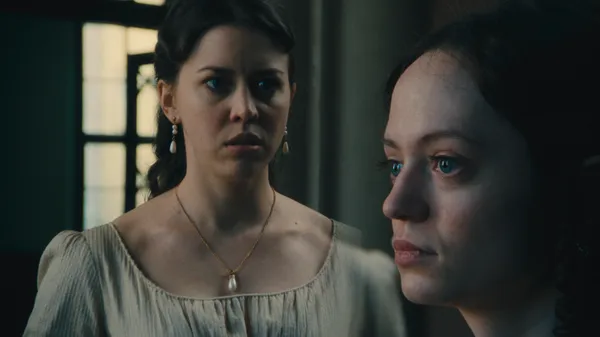

For a young woman approaching her wedding day, nerves are nothing unusual, but there is about Florentine (Alina Schaller) such an air of melancholy that her fiancé, Bruno (Daniel Holzberg) is beginning to wonder if she wants to be with him at all. She has been spending time at the grave of her younger sister, Seraphine (Fanny Altenburger). Is it just that this is one of those life-changing events she always imagined going through with her sister at her side? The truth, Florentine eventually admits, is more complicated – and so unfolds a tale of sickness, prophecy and fear.
Screened at the 2026 Fantasia International Film Festival, this lovingly-wrought short film is adapted from the 1810 Friedrich Laun story Die Verwandtschaft Mit Der Geisterwelt (loosely, ‘The Relationship With The Spirit World’), and is part of a collection of classic horror adaptations produced by Kier-La Janisse. Like many ghost stories of its era, it has a very simple plot, with the focus on atmosphere and underlying themes. Austria in this period was already at the centre of a developing understanding of the mind and mental illness. Laun was alert to these new ideas, so what we get is an early version of the still-popular mystery in which the answer could be supernatural or psychiatric.
The balance of these possibilities is maintained by the fact that most of what we know about Seraphine is filtered through Florence’s memory (and, one assumes, her own encounters with the popular literature consumed by young women at the time). We don’t know why Seraphine might have made the claims she did. We also don’t know how accurate Florentine’s perceptions or memory are, and we do know that she is under intense stress.
Although there are a few issues with some of the details, such as the fabrics used, by and large the recreation of the period – also kept simple – works very well. Interiors are softly lit to give the impression of candlelight, with a slight but perceptible increase in shadow around the edges of the frame. Exteriors are shot in moist air which naturally diffuses the light. Wooden furniture is not overly polished and make-up is lightly applied so that natural, absorbent textures contribute to the effect.
Beneath it all is that strain of horror which dates right back to Antiquity: fear of the inescapability of fate. One might think of any number of technical exemptions from the apparent destiny that haunts Florentine, but even today, most people recognise that prophecy is disinclined to indulge such trickery. Meanwhile, there is a sense of societal undercurrents shaping a parallel, perhaps inescapable process, as a shift is occurring in relationships between men and the women who no longer take their subordinate status for granted. The spirit world is itself becoming entwined with female power. Bruno is a kind, supportive man, but can his love compete with the bond of sisterhood?
The more you know about this story and its context, the more you will find to appreciate about the choices made by director Peter Hengl. The flip side is that without this knowledge, unless you happen to have similar fears, it may fall a bit flat. Its elegance will catch the eyes regardless, but it doesn’t quite capture the force of the original. Still, it’s an interesting choice for expanding a collection which is well worth watching closely.
Reviewed on: 09 Aug 2026


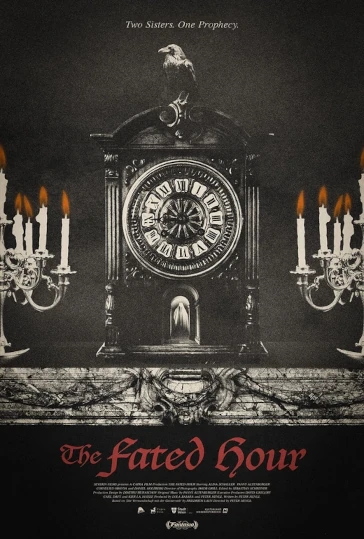
Director: Peter Hengl
Writer: Peter Hengl, based on the short story by Friedrich Laun
Starring: Alina Schaller, Fanny Altenburger, Cornelius Obonya, Daniel Holzberg, Dabiel Krunz, Hans Wolfsteiner
Year: 2026
Runtime: 35 minutes
Country: Austria
Search database:
